When web 2.0 became the norm, the about of misinformation grew a lot. The more the people were able to write anything without getting embarrassed of being proven wrong, the more the misinformation started coming out. Over time I started learning on how to assign weightage to what I read and have a small set of trusted sources, then I was able to navigate misinformation well. The flood of forwards in then email and now whatsapp which often looked true often have failed even reputed news agencies.

An example of such a forward was the ‘O-Yes’ operating system that circulated in the late 90s. Every college internal magazine’s editors fell for this forward and featured it in their magazines. Even now, Google search’s AI overview lists part of the email as the OS features without debunking it is as a myth. I fought really hard to disprove it during my college days and ended up with a lot of wasted effort as it still got published.

This is called Brandolini’s law, the amount of energy that is required to refute misinformation is orders of magnitude larger than the effort needed to create it. There are another class of problems where if you fight misinformation then you are at the risk of losing your membership/status in the community. For a very long time in India, you cannot tender 10 rupee coins as people formed an opinion that they are fake.
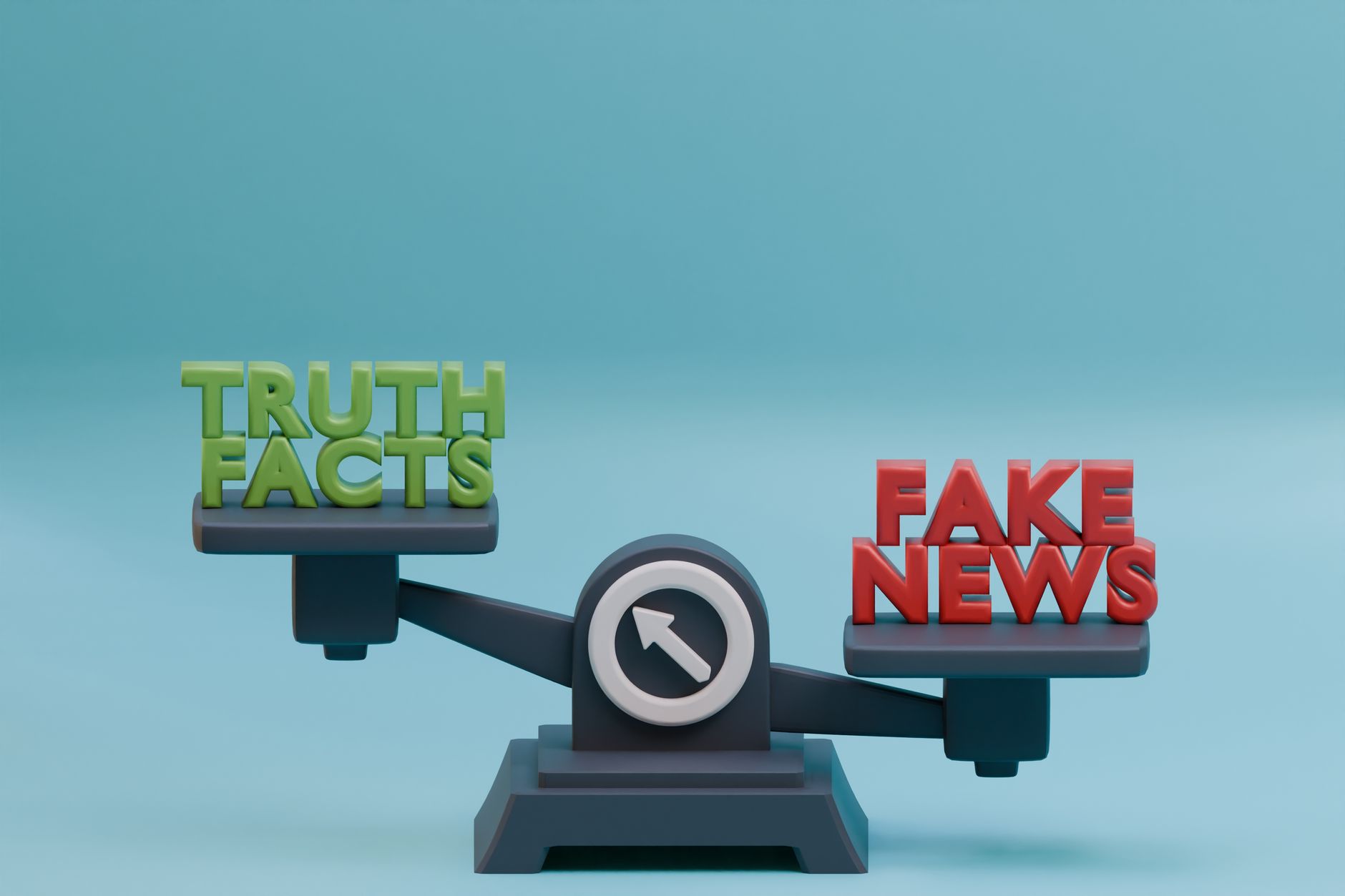
Photo by Insaanu Studio on Pexels.com

The more you are engaged in rapidly evolving landscapes, the more you stumble on this problem. With Gen AI, we are even more hit with misinformation that seems very close being treated as real information. The tool is available to the masses, yet there are fewer individuals who can prove/disprove. False experts, an offshoot of advanced beginners are on the rise due to these tools.

Before Gen AI, whenever I used to interact with the executives, I could sense that the tone of conversation is to understand about problems and solutions deeper. Nowadays I observe a marked shift in the tone towards “oh, I know this stuff, tell me something I do not know yet”.

One solution that often works for me, is to ask for the source of the claim or statement. People struggle a lot to admit what they gained without understanding the source. Questioning the source often works in a live setting where you are either in a meeting, 1-on-1 conversations or talk event like round table. In high stakes conversation, I go with ‘I agree’ and say where it may work and then follow up with why it does not work everywhere else. Due to the effort asymmetry, it is necessary to reserve the strength to confront only the ones that are absolutely necessary.


Demoes are always concepts, they are not a showcase of capability instead it is an artistic impression of what is possible in the end state. A frequent repeated pattern in the enterprise software I see is that – someone builds a something eye catching in a short turnaround time, it gets coverage and people are assigned to take it production and then it stalls like how the loading icon appears when you try to watch a hd movie with a poor connection.

Photo by SHVETS production on Pexels.com

I had been an advocate of rapid prototyping & development and XP practices all along my career. It is in my best interest to find increasingly faster and sound ways of developing software. The first problem to solve in software development is never programming, it is to figure out ‘are we building something that people would want it very badly?’ Building something was expensive so people had to be extra careful to understand if they are going down the right path. With advent of more and more easier programming tools, the building part became easier and easier to the point right now that we can do lots of work in an extremely short window.

Photo by Deniz u015eENGu00dcL on Pexels.com

This paved way for ‘Let us build first and check if it works’. This is where several people stumble and I am reminded of the infamous developer quote ‘It works on my machine’. ‘Works’ means different to different people. Productionising an application is far from development completion. It involves architecting, designing, testing, certifying, securing, scaling, monitoring and on and on. The UX has to be top notch, architecture should be easy to scale, design should be able to add more components with less effort, when scaled and distributed it should take advantage of economies of scale and bring more returns.

Another bigger problem I see with the current state of development is that zero to one has become an easy to solve problem but people are stuck at level one and very few have the capability and grit to move beyond the starting point. What has in fact happened is that the starting line has moved from zero to one, the difficulty of getting to the finish line still stays the same. I feel it is momentary that people are getting carried away and impressed by the quick turnaround time.

Only when all the parts of the cycle from start to finish are transformed to a rapid development pace, then demos will be an engineer’s showcase not like an artist’s impression of how the finished product will look like; which is easy to demo and hard to ship

A lot of CEOs are openly misanthropic, they dehumanise people as another expense in their sheet. Very open statements like the ‘New tech is going to do all the jobs, we do not need to hire humans anymore” are presented to drive insecurities among people. Historically, every revolution has required lesser and lesser humans for an activity thereby contributing to more people to higher order work. One single farmer can easily feed another 10 while a hunter-gatherer could not feed beyond their family; which meant farming communities had a lot of people available to figure out to do more than just try to figure out how to eat day in and out.

Photo by Pavel Danilyuk on Pexels.com

What if everyone loses their job to AI? It will lead to extreme poverty and zero buying power leaving the companies with no buyers which is nothing but a self destruction. Another issue is with the thinking, every other leader I come across, hate humans and see them as expenses. A very bad mindset where the very nature of human existence is questioned. Society truly advances when there is boredom, not enough work to do while still being able to afford a living. When an executive only thinks about a cheaper present and not an advanced future, it is not anything about progression but regression disguised as progress.

If the executives still push for a cheaper present in a misanthropic manner, then governments have to turn to being socialist. Pay people a living wage, healthcare and basic shelter which will build boredom in people’s life to do something meaningful to create a higher order future that results in progress. If that does not happen and no one takes any step against misanthropy, there will be a collapse in the society to reach a breaking point, before misanthropists are dethroned but not before extreme regression resembling feudal societies.