I complete 20 years as a working professional this month, this is a rear view look. Times change and what applied to me may no longer be applicable now but felt it as a good exercise to look back and pen down the themes. 20s is the age that you feel you are invincible and have a seemingly long future outlook, that gives us a feeling that the 20s will last forever. This makes us subconsciously go for things that only cater to the present but create a harder one for the future self.To give an idea about how times change, let us see cost of living – gold was 10 times cheaper 20 years ago, which means buying a 100cc bike like Hero Splendour was an achievement, it retailed at 48,000 rupees. A salary of 4,000 was adequate for me to start my career.

Luck is a factor on how big we can make it. I ended with a good job only because I went to meet a friend whom I hadn’t met for a long time and he had arrived at my town for an interview, I went along with him. Walk in interviews had 1,000+ people waiting outside the gate at 7 AM to be let in for a 9 AM interview. That is how bad the outlook was for the first job if not placed through campus placements, it was extremely hard. The interviewers do not have the time to sift through so many profiles and find us, irrespective how well prepared we are or how skilled we are. How to increase the luck? The only way to increase is through serendipity – showing up more at places, connecting with a lot of people, have varied interests. Once our foot is in the door, only then the skills get applicable. Throughout the career, this keeps repeating for me.

Photo by Natasha Fernandez on Pexels.com

Once I got the job, I felt that going all out on tech skills will be my forte. I used to take pride that people see me as a wizard who gets a lot of things done. Within a few years I had hit a plateau of what I can accomplish individually. I was putting in more and more effort without moving the needle on the performance indicators. I fell sick often in the pursuit and it caused more setbacks. It is when one of my mentors pointed out on how to become a multiplier instead of being a standalone maker. I had to rewire my ways of working and learn what puts me up in the next level. One of them was communication skills which was a bottomless pit to get skilled on – presentation, interpersonal, spoken and written english, non verbal, feedback on and on. The rule was simple, if I am on a team, the entire team’s productivity should go up.

The invincible 20s mindset, makes us feel that we can go at break neck speed, consume anything, don’t rest and yet still manage to survive. All the years of neglect suddenly manifests one day as a bolt from the truth. A major problem I had is that I did not eat and sleep well in my early days of career. After a point it was a constant repeat of medicines, physiotherapy and poor health until I figured out nutrition and exercise. A sound body creates a sound mind.

The more later you learn skills like driving, language, music, cooking the more difficult it becomes due to the time commitment needed get to a basic level. As we move up the life ladder and start a family, time flies and hard to set aside any time for learning new things that require commitment. Cross discipline learning is very important along with life skills, learning never stops but it becomes easy when you start early. Often times you will hit a plateau in the career, it requires a change in the way in which we work and learn that needs extra effort. Example moving from an individual contributor to lead, a lead to an expert, an expert to an org leader etc. Before making the jump enjoy the plateau for a while but don’t settle there.

When speaking about time, the best investments I have made are the ones that help me save time. Fully automatic washing machine/dryer combo, electric cookware where you can program and set timers are to name a few. I made the mistake of buying status symbols first before coming to terms to reality. The amount of time that gets saved by delegating away is huge.

About savings, I was poor like everyone else with savings. I thought property is the biggest savings and went all in as one stop investment. What it made me was to be afraid to try new things so that I won’t lose the steady stream of income. Living paycheck to paycheck is a very difficult situation and makes you put up with toxic workplaces or makes you risk averse. I did not try my hand on starting a business on my own because of the huge loan bills I had to pay every month. Best form of savings/investments are something that you can pause or redeem when needed, not locked up in real estate through a loan. Car and bikes are a spend not an investment.

Recap – Luck plays a major role in what we are today; being a team player matters; communications skills can never be enough; body and mind keeps score, take good care of it; invest on things that saves time; learn as much as possible early in the career including life skills; understand financial resilience and actively pursue it.

Don’t regret anything, just fix the future

A middle aged obese couple takes a new year resolution that they will get to their normal BMI this year. Being well read and controlling sufficient wealth, they get to a doctor who specialises in treating obesity. The doctor recommends them a diet plan with quite a lot of restrictions and an exercise plan that requires a couple of hours every day which will be monitored by a trainer. If they begin the transformation journey and review month on month, the doctor says that within about 12-14 months they should be in the higher bounds of an acceptable weight for the height and gender.

A boring meal plan and long physical activity is not what they had in mind, so they set out to read more about this and stumble on forums where they zero in on two terms – Liposuction and Bariatric surgery, which does not need any meal or exercise plan. They go back to the doctor asking for these options, they are explained about the high risk of infection, tissue death and rebounds and advised to drop this idea. The couple with sizeable money in their pockets find another doctor who will do these procedures for them. A few months later one of them dies due to liposuction injuries not healing well and other dies of necrosis due to complications of bariatric surgery.

Photo by Kate Trifo on Pexels.com

Irrespective of the transformation whether it is business or personal, the first thought I observe that comes to a decision maker is the shortcuts/canned stuff that are available. People visualise transformation to be a big one shot activity, which when done people can continue to operate with the old ways. In reality, transformation is nothing but a change in the ways of operating itself and it does not have an end as an activity, it goes on and needs more evolution to keep up with the dynamics.

For a company to digitally transform themselves, they need a strong team that can support their new digital part and alter the ways of working to support the organisation. If a team has been hired/contracted to deliver a product/project that will transform the company, it is the first step towards failure. Owning up a transformation is necessary as it changes the ways of working than upgrading the systems and tools. If it is not easy for the business to bring technology into the core of their business, then it is necessary to find a partnership that can help them with the transformation. Partnership is an overloaded word, where it is now used to refer to vendors and contractors; partnership has to be true partnership and should have skin in the game for the transformation.

There is no easy way out, every transformation comes with the pre-requisite that you can’t buy it off with money, you have to be involved from within and put the efforts to sustain.

Do earthquakes happen on the moon, please explain? I vividly remember this question in an English course examination in my school days. Many of us felt angry because this is a physics question that has been asked during the English exam. Some just answered ‘yes or no’ thinking there will be some grace marks awarded. A few of the students even got their parents to the class next day to argue with the teacher that this is an out of syllabus question and the pupil should be awarded full marks to it.

In the next class, our teacher explained that this is a perfect English exam question and the answer to it is – “Earthquakes happen only on earth, if it happens on moon then it is called a moonquake”. Our teacher definitely disrupted the rote style of learning and forced us to comprehend more deeply what we read than just a shallow pass through of memorised phrases.

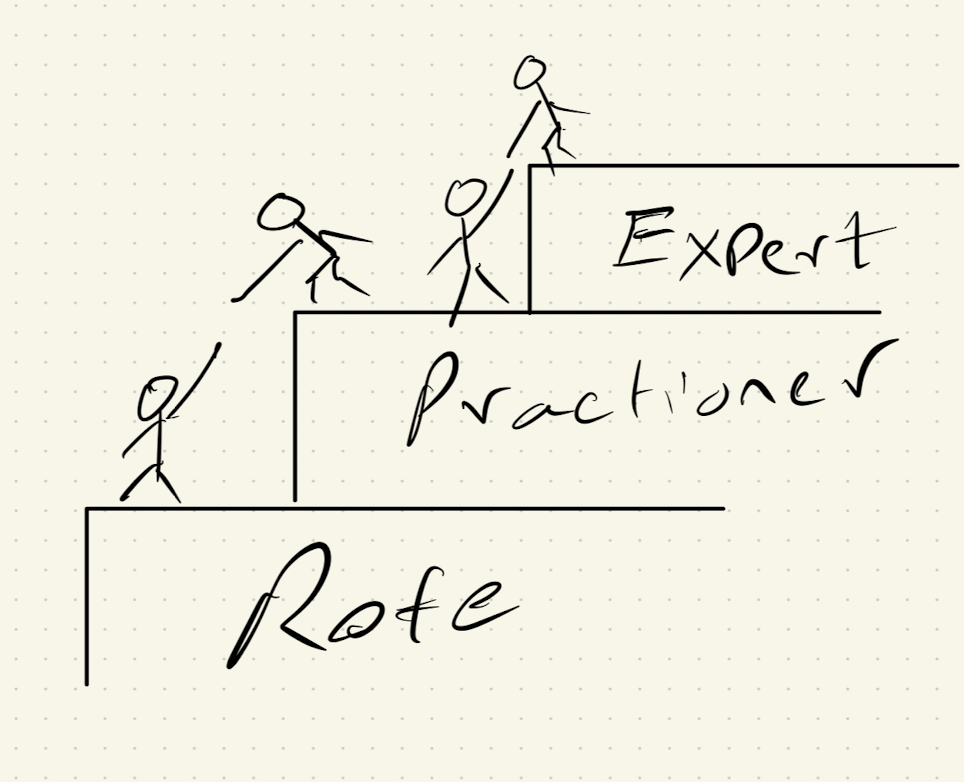
To get to the mastery, you start by the rote but you have to get into deeper comprehension soon or else we will be stuck forever in a knowledge loop without any applicable wisdom. Software development is no different, especially when agility is the key. What is the problem that is troubling the software industry now? It is the glut of rote learners who are misguided to stay as rote learners with an assurance by a small set of high profile consultants and trainers.

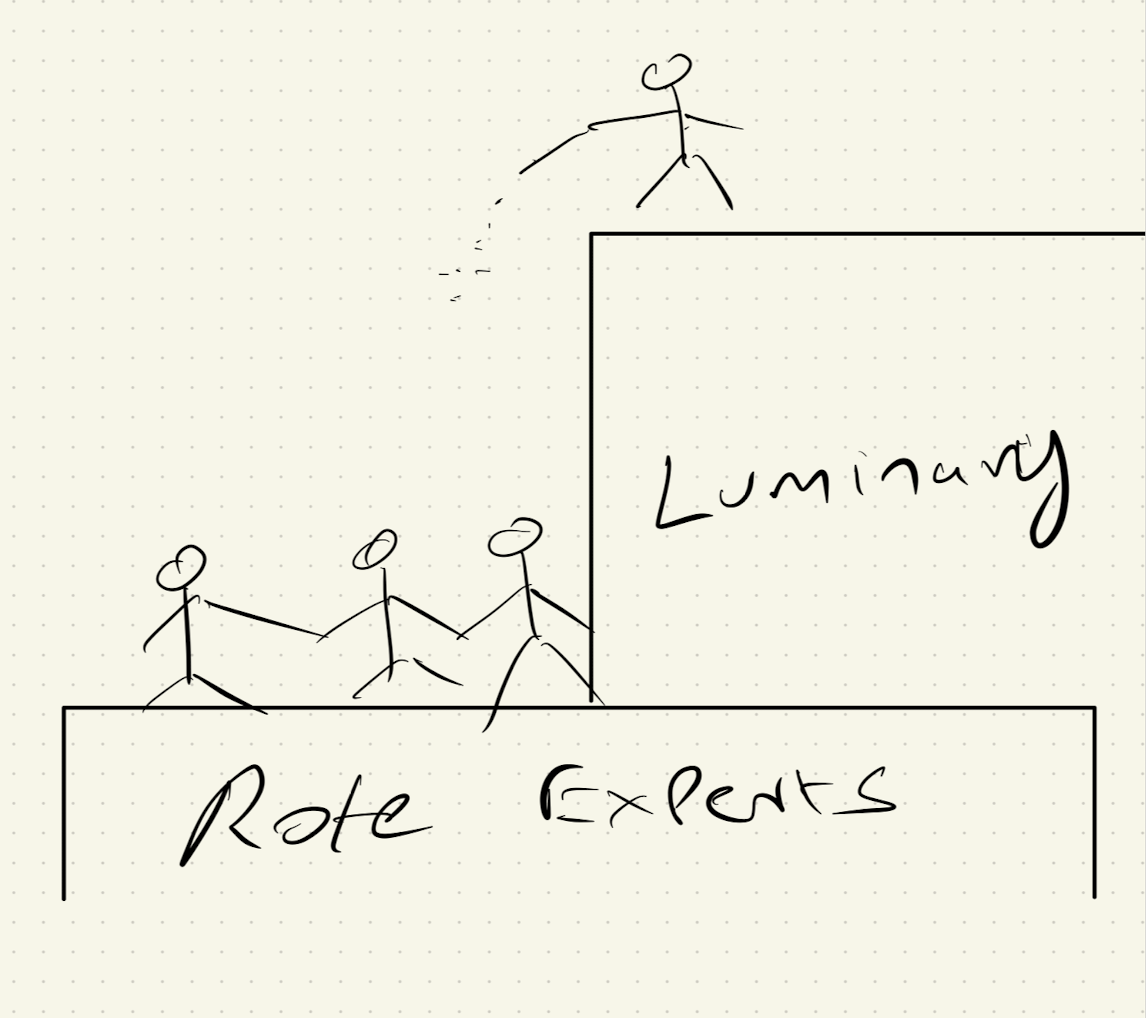
In this model, the luminaries will be happy to certify the rote learners as experts because it benefits them a lot in terms on money and fame. They ill equip a lot of people from developers to executives with runbooks and cheatsheets full of jargons and metrics which then becomes the industry standard. Recent article from a major consulting company on measuring developer productivity is one such example. It has angered all the real practitioners and experts forcing them to vent out their opinions including me. Some experts have taken such articles and have given a thorough explanation of why it is wrong.

What should be the model then? Rote learning is always a starting point. At the starting point people are dealing with the knowledge in an abstract way, which means they won’t understand the underlying value and intent of a practice or a process. When they do something by rote, they work along and observe the practitioners, understand the value and intent behind what they are doing and are able to internalise. Over time, because of deep understanding gained on the ground and interactions with other people, people develop expertise. The common theme here is collective growth as a community not as an individual who excels in arbitrary metrics.

If an organisation wants to improve their productivity, driving through metrics will always result in behaviours that encourages excellence in metrics. It will easily runaway into a toxic culture where no one wants to help another unless it helps their metrics. Organisations should bring in a culture of resilience where communities exists with an intention of upping the notches of everyone, Some people when they gain very good expertise they go even further and extend the community reach outside of their workplace. Information should flow more freely across layers and people should feel safe to try new things and fail safely to improve productivity and resiliency. These things are hard to keep in effect and hard to measure, so not many leaders try it.

Now coming back to the title of this blog. I am beginning to see that the so called experts or luminaries are not calling out that ‘it should be called moonquakes’ instead they are selling tools and frameworks to observe and detect earthquakes on moon and reinforcing wrong understandings to a great deal.