I read the book Maverick by Ricardo Semler and learnt that every one wants to do well by themselves instead of a supervisor telling them what to do and watching them closely. It was a very new concept, though I was not able to influence my managers, I was able to follow this for people whom I had to lead. The results are often that people end up punching above their weight most of the times, people who try to game are often exposed within a few weeks and they themselves are not able to continue to work with our teams. I also stumbled on his second book The seven day weekend, which was more thought provoking on how to approach life in general and not to differentiate work and life as two different identities.

While I was in college, I learnt a lot and read a lot of books even though I spent a good deal of time commuting and playing. When I moved to be a full time worker, I found that my time for reading and learning quickly dried away. My managers insisted that I spend 12 hours a day, 6 days a week in order for me to meet expectations. What I observed was that most of the work got done within a heads down time of 3-4 hours. If I was stuck, no matter how hard I tried, I could not make headway until I got some focus time away or sleep. My attention span also varied throughout the day and throughout the week.

Photo by Andrea Piacquadio on Pexels.com

In the course of time over a few work years, I also forgot about leisure reading, arts/crafts and exercise/sports. This led to only two outlets, food and media. No matter how hard I tried, I was always finding excuses to eat out and binge watch. One fine day, I got to work with a new team. The rule of the team was, we stop working by 6 and go out to play. This was different from what I was used to before, it worked wonders because it forced me to come out of the work mode and unwind and find friends in a non eating/drinking setup. The self formed XP team ensured that the peak productivity window as a team is aligned for team work and the rest individual contribution can come at a different pace.

Photo by Elina Fairytale on Pexels.com

This blended work/life mode was unnerving as there was a feeling that I was not doing enough. At the end of a release we retrospected along with the client on how did we do? Our client said a similar complexity and scope that was delivered by 40 people from another team, this team had done it with just 11 people. As I grew in career, non linear working mode was the norm. I always carried a pen and paper with me, ideas struck me when I least expected, solutions appeared out of nowhere while waiting at traffic lights, cooking, gardening, having coffee….

My experience was also validated when I read the book The pragmatic programmer where the author talks about linear mode and random mode in one of the chapters. Don’t listen to ideas like 996 working style and promise of progress that comes with it, they are not fit for collective knowledge work. It also drains the mind and the body, because of the constant war mode that an individual will live in. As I read in the books and experienced, I have not been able to separate out my life and work as two separate jobs, it is what I am. So instead of talking about balancing two different jobs, I look to plan my days as a whole.

I recently installed an app to get groceries and milk delivery at home every morning. When I browsed through the catalog, a lot of items were cheap but when added to cart they asked for a subscription fee to checkout at the listed price or pay markup on the items which were much more than what it was listed on the catalog. So I went ahead and paid the subscription fee and when checking out I see that only some of the items are discounted but not all the others. When I looked into the details, the subscription had a fine print that the price was applicable for only 15 items and it auto applied to all the cheapest items, leaving out the bigger items at the markup price.

I anyways continued to order to check the quality of deliverables and over the course of few days I felt that provisions ran out a bit faster than the previous vendor. On checking the details, all the products sold are in the range of 400-450 grams or 400-450 ml instead of the standard measures of multiples of 500. I checked around who these people were and found a patch which proudly claimed that it was a product of IIM alumni. Why on earth someone spends entire early adulthood preparing to earn a good degree just to mislead and profit.

Photo by Wendelin Jacober on Pexels.com

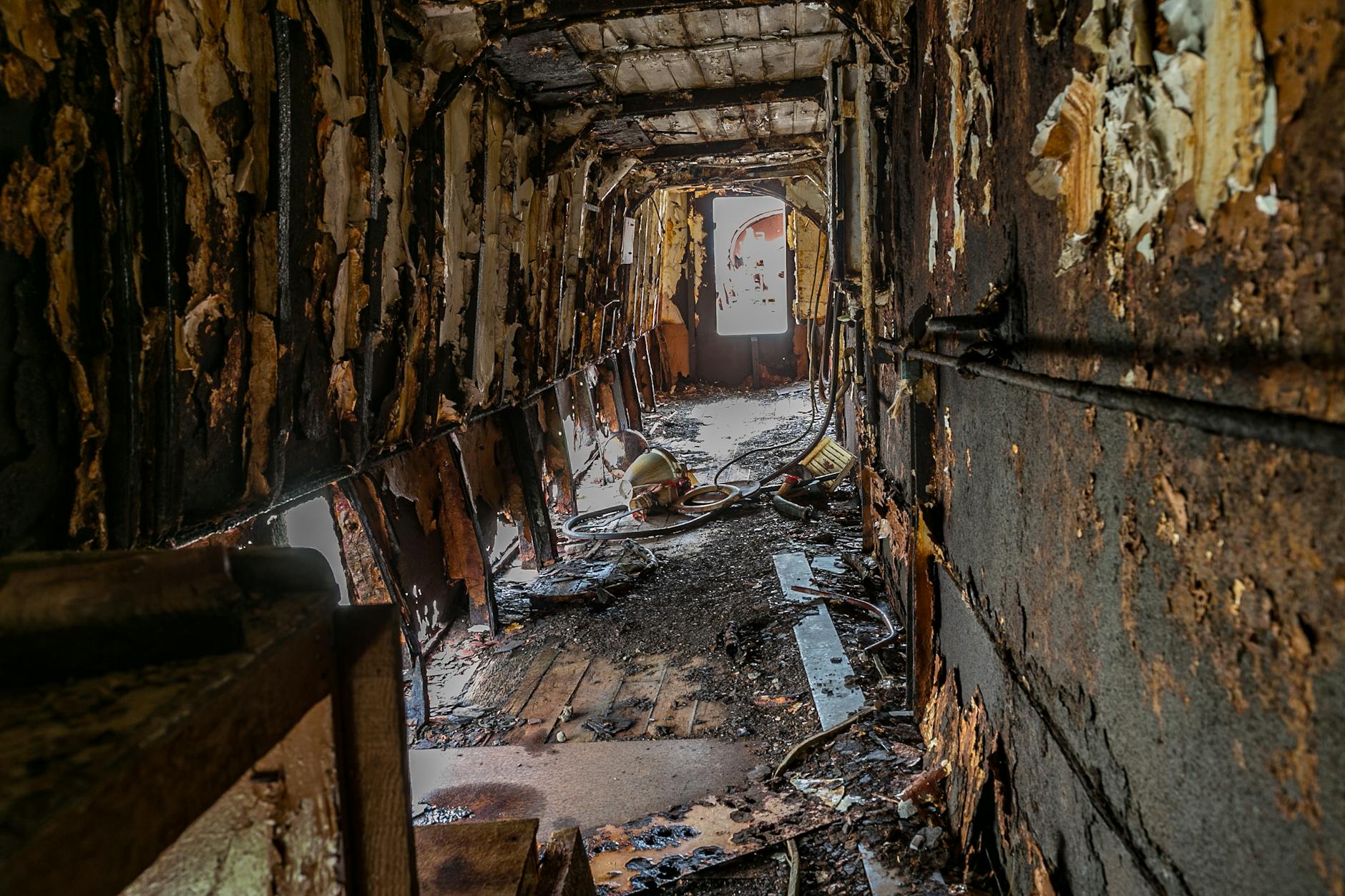
These kind of rots and rusts are evident in the society, at workplace it is hard to spot. While it may not be deliberate act of mislead and profit, it is more of rent seeking that is rusting the workplaces. Job characteristic theory mentions that a good favourable job will promote

  1. Skill variety – To learn continuously and implement
  2. Task identity – Where people understand the larger picture about whatever small they are doing
  3. Task significance – The general good feeling of doing something positive for others
  4. Autonomy – Accountability on actions, elbow room and breathing space. No one constantly telling people what to do
  5. Feedback – To know whether what someone did is good for not in an actionable way so that they can build on the failures

Conventional industrial processes did not worry about any of the above as it was primarily a dead end job. When software was first developed it was very similar. Breakdown the entire work into small chunks, sequence it and give it to people to finish the product. The industrial type work relied on individual contributors working in isolation with a specific skill, as long as they follow the job description the end output however complex it looks can be achieved. The knowledge type work relies on individual contributors working along with others in the group to be successful. It is a key difference, the industrial type of job is a dead end job with no autonomy, skill variety or task significance.

The rots and rusts start from there, young individuals join the knowledge workforce expecting to do big on their career but are stifled by the system that was designed for industrial type of work. Eventually people become victim of systems, they become tired of always being told how to do and what to do. The faster they escape from the situation, the better so they try to get into management as soon as possible. This steps furthers the rot, an individual contributor who did not understand well how to do their work within a team is now equipped to tell others how, when and what to do.

Where do people look up for guidance in a new job role?, it is their peers who are doing similar things. Anything which has a short term gain and less learning horizon gains traction compared to long horizon ones. Example – Click bait to increase engagement but lose the brand value over long run. As long as the increase in engagement is rewarded handsomely this behaviour will continue and the person will move on to another place leaving the after effects to be handled by a successor.

Shanty towns – Locally optimised but a collective failure. Picture from pexels.com

Slowly many anti patterns become an accepted practice and become templates for career growth. A rotted and rusted system will cause more victims of the system. Every one will be governed to optimise for themselves but collectively fail. Agility in software development was a key issue when people were following the industrial type of work breakdown and development, a bunch of people got together and came up with the manifesto to bring agility into software development. What followed after 2 decades is that there are plenty of frameworks and processes but no agility. Ask this question, if a business needs to wait for a release train next quarter to test out their hypothesis and implement that in the following quarter, how is it agile?

People can attend a training for 3 days and become masters in driving agility in their teams, it is like saying you can become a football coach by attending a 3 day training, that is how broken the industry is. Unless an individual realises and resists to contribute to the rot, the rotting and rusting will continue.

A middle aged obese couple takes a new year resolution that they will get to their normal BMI this year. Being well read and controlling sufficient wealth, they get to a doctor who specialises in treating obesity. The doctor recommends them a diet plan with quite a lot of restrictions and an exercise plan that requires a couple of hours every day which will be monitored by a trainer. If they begin the transformation journey and review month on month, the doctor says that within about 12-14 months they should be in the higher bounds of an acceptable weight for the height and gender.

A boring meal plan and long physical activity is not what they had in mind, so they set out to read more about this and stumble on forums where they zero in on two terms – Liposuction and Bariatric surgery, which does not need any meal or exercise plan. They go back to the doctor asking for these options, they are explained about the high risk of infection, tissue death and rebounds and advised to drop this idea. The couple with sizeable money in their pockets find another doctor who will do these procedures for them. A few months later one of them dies due to liposuction injuries not healing well and other dies of necrosis due to complications of bariatric surgery.

Photo by Kate Trifo on Pexels.com

Irrespective of the transformation whether it is business or personal, the first thought I observe that comes to a decision maker is the shortcuts/canned stuff that are available. People visualise transformation to be a big one shot activity, which when done people can continue to operate with the old ways. In reality, transformation is nothing but a change in the ways of operating itself and it does not have an end as an activity, it goes on and needs more evolution to keep up with the dynamics.

For a company to digitally transform themselves, they need a strong team that can support their new digital part and alter the ways of working to support the organisation. If a team has been hired/contracted to deliver a product/project that will transform the company, it is the first step towards failure. Owning up a transformation is necessary as it changes the ways of working than upgrading the systems and tools. If it is not easy for the business to bring technology into the core of their business, then it is necessary to find a partnership that can help them with the transformation. Partnership is an overloaded word, where it is now used to refer to vendors and contractors; partnership has to be true partnership and should have skin in the game for the transformation.

There is no easy way out, every transformation comes with the pre-requisite that you can’t buy it off with money, you have to be involved from within and put the efforts to sustain.