 Still at my home town some people equate being fat to prosperity. A fat person is someone who had steady access to food even at times of drought and famine, hence dying of hunger was ruled out. People ate whatever they can so that starvation does not kill them. Food revolution increased the availability of food and people started to eat well; when the life expectancy of every one improved, obesity became an issue. People were now dying because of overeating, unhealthy snacking and not maintaining a healthy life style.
The same is applicable to information, the differentiation between wise and knowledgable is not understood well. Just few decades ago in India, information was flowing slowly through government run TV channels, newspapers and books. The commute times were shorter with predictable work schedules, leaving more time for interaction with people and also enough time to read. I vividly remember the elders at home reading a novel in the evening, weekends or while standing at a long queue. There were reading desks at home where people read something and make notes.
If you summarize a book, often you will end up with a few lines which was the message from the book, but it will have a deep meaning to us if we had come up with those lines after reading and summarizing our thoughts, than those lines arriving in tweet.
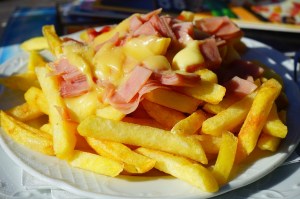 We are right now in the era of information snacking where we are increasing our knowledge to a great deal, learned to drink it out of a firehose but not able to apply it effectively when needed. More and more people are addicted to ‘pull to refresh’ and snack on one liners, emails are annotated with TL;DRs and prefer to read a lot of tweets than read a book.
Manage the distractions before you are ruled by them.
TV was  one big distraction which was overtaken by social media, staying away from this for quality information consumption and time for family is a difficult but not an impossible thing to do. It is like going to gym toning up the body complemented by a healthy diet. Start slowly by turning off all notifications, keeping only one or two channels like telephone as an instant communication system; in other words change to a pull mode than being pushed with information. Dedicate slots for reading books, newspapers or other things which has long text, periodically clear out the social media backlog; indulge yourself once in a while but come back to a healthy routine.
 Why read long texts? Reading has helped me gather thoughts, play thought experiments, ability to write & articulate well; beyond that it took my mind of the constant buzz that follows a work day. Maintain a list of books to read, motivate other friends to read and share your learnings and stories. There are so many books that are rich in content and only limited time to read, sharing the book experience with others is rewarding as we get lots of information from others in a condensed but more interactive form as well as encourage us to read more and share. Stay away from information snacking, it just feeds empty knowledge. Consume information with a planned diet.


 Novi's