Kent Beck gives a good introduction to adoption of XP through an analogy of learning to drive. A brief extract can be found here. The learning to drive analogy is applicable to any discipline, where the instincts have to take over conscience in other words the motor/muscle memory will play a bigger part than a conscious effort, but when demanded we need to rewire our learnings. Music is also analogous to this.
The steps in becoming a good in something.
Start immediately
Procrastination affects a lot of us and one of the key catalyst for someone to procrastinate is the idea of perfection. This is because of the fear of failure and being judged, so people end up reading and studying about something instead of learning by doing. Unless we get into something mission critical or any action that will cause any irreversible consequence then we should not hesitate to start. By starting immediately, we will be forced to learn the absolute minimum that is required to start instead of getting equipped with a world of knowledge.
Be predictably slow at first
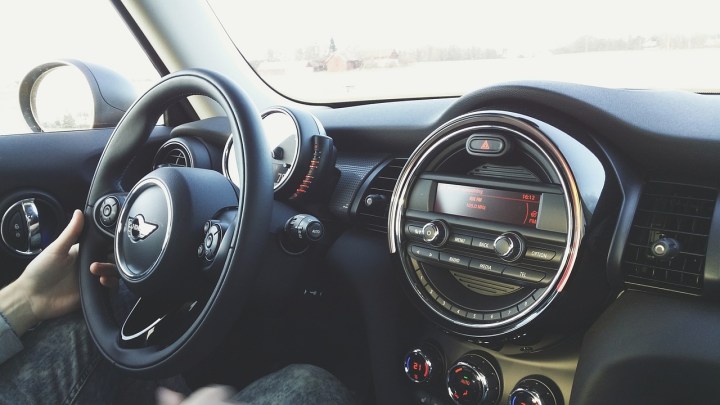
There is a sense of satisfaction in moving up the levels, so people immediately step up their levels without getting a good understanding of what they learnt. When I was learning to drive, I was never allowed to shift to the 3rd gear until I was able to drive the vehicle without getting stalled in the lower gears. Same goes to my piano tutor who never allowed me to step up the tempo until I never missed a note. This made sure that whatever I had got it into my head is done the right way, I was very angry with my tutors as they never allowed me to step up quickly but in hindsight it makes sense; unlearning something learnt wrong takes a long time than learning it to do the right way.
When stepping up, change only one parameter at a time
We learn more and more faster and deeper when we are able to understand the effects of our actions. The more we are able to identify the cause and effects, the better is our ability to sense the patterns and apply learnings at a more abstract level. Stepping up the learning through one parameter a time allows us pinpoint the cause and effect, helping us to save energy. Someone shifting to 3rd gear and also driving in rain for the first time on a slippery road will not lead to effective learning.
Once comfortable, keep getting exposed to new conditions.
When we are comfortable in a new skill, chances are high that we get stagnant. Routinely exposing us to newer challenges helps to sharpen as well as prepare us for unknowns. The comfort zone is where the instincts take over the conscience, but when the situation demands we need to switch back to the conscience and make quick judgements from our experience. Good drivers are not usually worried about bad weather or poor visibility, instead they know when to stop driving and when to carry on.
Listen to others, over time we may pickup bad habits.
Habits change as soon as the feedback stops, I used to drive without co-passengers for an extended period of time and developed a tendency to jump over potholes and speed breakers. This annoyed my co-passengers and until I heard from them, I never realized that I had developed a bad habit. It is very difficult to sustain best practices or get a new one, getting a mentor or coach or even just plainly listening to other’s observation will help us a lot.
Never underestimate the power of a coach or a mentor
The coach in the operating room published by the New Yorker magazine tells about how an accomplished surgeon realised that even the best tennis players had coaches and decided to take a coach with him to the operating room. The doctor was doing a thyroid operation which he has done many times and the coach had never done that type of surgery so there was no expectation on useful feedback. At the end of the surgery the coach surprised with a lot of detailed observations which were overlooked and missed by the team. If we are to be professionally better at something then get coaches, does not matter who we are or how successful we are.
When learning stops, we regress
 dream of growing up to a respectable status, have lots of possessions and make decisions. What I did not realise was the amount of responsibilities that came with growing up. The first big desire for any one to grow up is the desire to be independent, not be told what to do instead do what they want. It was always about the desire to be independent but oblivious to the price to pay for being independent. People will stop worrying about us less, we will be expected to stand for ourselves and care for dependent ones as grown ups. Being a grown up is a responsibility than a perk.

 Novi's