A middle aged obese couple takes a new year resolution that they will get to their normal BMI this year. Being well read and controlling sufficient wealth, they get to a doctor who specialises in treating obesity. The doctor recommends them a diet plan with quite a lot of restrictions and an exercise plan that requires a couple of hours every day which will be monitored by a trainer. If they begin the transformation journey and review month on month, the doctor says that within about 12-14 months they should be in the higher bounds of an acceptable weight for the height and gender.

A boring meal plan and long physical activity is not what they had in mind, so they set out to read more about this and stumble on forums where they zero in on two terms – Liposuction and Bariatric surgery, which does not need any meal or exercise plan. They go back to the doctor asking for these options, they are explained about the high risk of infection, tissue death and rebounds and advised to drop this idea. The couple with sizeable money in their pockets find another doctor who will do these procedures for them. A few months later one of them dies due to liposuction injuries not healing well and other dies of necrosis due to complications of bariatric surgery.

Photo by Kate Trifo on Pexels.com

Irrespective of the transformation whether it is business or personal, the first thought I observe that comes to a decision maker is the shortcuts/canned stuff that are available. People visualise transformation to be a big one shot activity, which when done people can continue to operate with the old ways. In reality, transformation is nothing but a change in the ways of operating itself and it does not have an end as an activity, it goes on and needs more evolution to keep up with the dynamics.

For a company to digitally transform themselves, they need a strong team that can support their new digital part and alter the ways of working to support the organisation. If a team has been hired/contracted to deliver a product/project that will transform the company, it is the first step towards failure. Owning up a transformation is necessary as it changes the ways of working than upgrading the systems and tools. If it is not easy for the business to bring technology into the core of their business, then it is necessary to find a partnership that can help them with the transformation. Partnership is an overloaded word, where it is now used to refer to vendors and contractors; partnership has to be true partnership and should have skin in the game for the transformation.

There is no easy way out, every transformation comes with the pre-requisite that you can’t buy it off with money, you have to be involved from within and put the efforts to sustain.

Do earthquakes happen on the moon, please explain? I vividly remember this question in an English course examination in my school days. Many of us felt angry because this is a physics question that has been asked during the English exam. Some just answered ‘yes or no’ thinking there will be some grace marks awarded. A few of the students even got their parents to the class next day to argue with the teacher that this is an out of syllabus question and the pupil should be awarded full marks to it.

In the next class, our teacher explained that this is a perfect English exam question and the answer to it is – “Earthquakes happen only on earth, if it happens on moon then it is called a moonquake”. Our teacher definitely disrupted the rote style of learning and forced us to comprehend more deeply what we read than just a shallow pass through of memorised phrases.

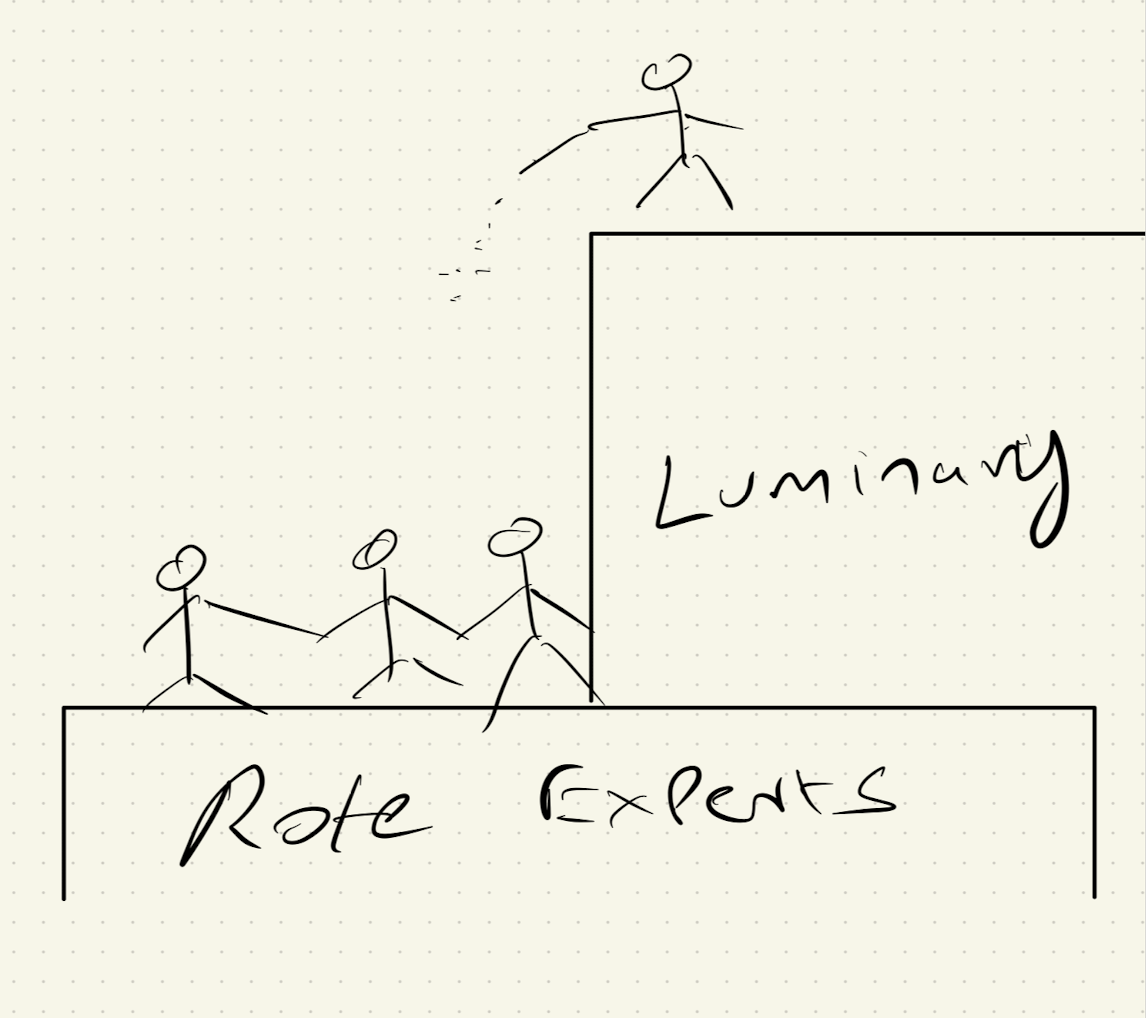
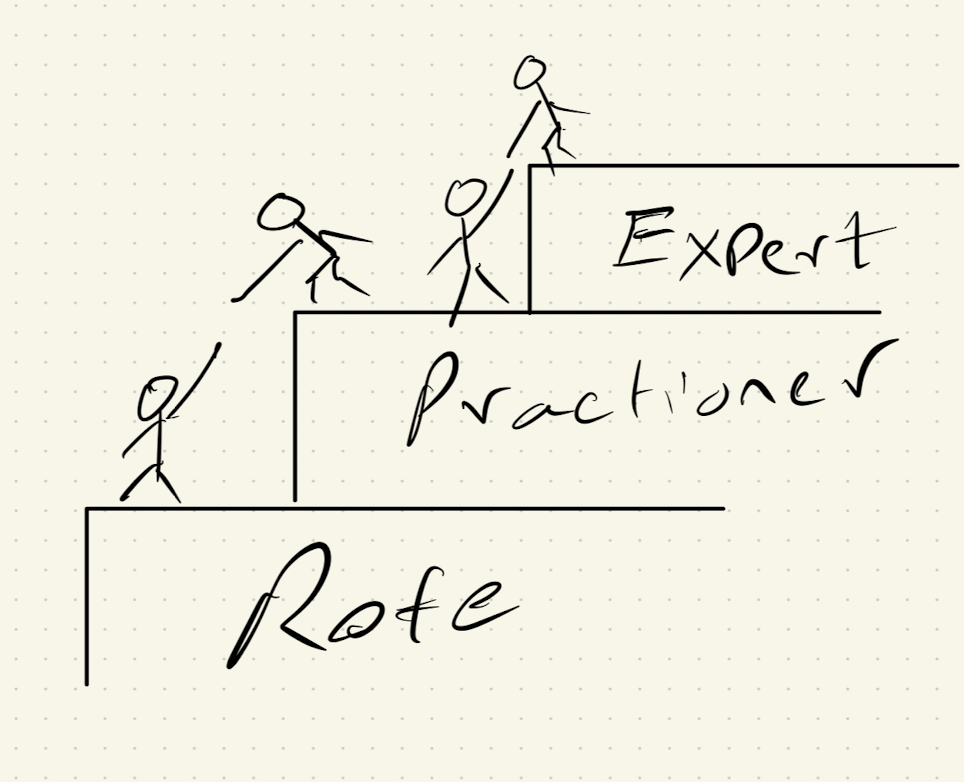
To get to the mastery, you start by the rote but you have to get into deeper comprehension soon or else we will be stuck forever in a knowledge loop without any applicable wisdom. Software development is no different, especially when agility is the key. What is the problem that is troubling the software industry now? It is the glut of rote learners who are misguided to stay as rote learners with an assurance by a small set of high profile consultants and trainers.

In this model, the luminaries will be happy to certify the rote learners as experts because it benefits them a lot in terms on money and fame. They ill equip a lot of people from developers to executives with runbooks and cheatsheets full of jargons and metrics which then becomes the industry standard. Recent article from a major consulting company on measuring developer productivity is one such example. It has angered all the real practitioners and experts forcing them to vent out their opinions including me. Some experts have taken such articles and have given a thorough explanation of why it is wrong.

What should be the model then? Rote learning is always a starting point. At the starting point people are dealing with the knowledge in an abstract way, which means they won’t understand the underlying value and intent of a practice or a process. When they do something by rote, they work along and observe the practitioners, understand the value and intent behind what they are doing and are able to internalise. Over time, because of deep understanding gained on the ground and interactions with other people, people develop expertise. The common theme here is collective growth as a community not as an individual who excels in arbitrary metrics.

If an organisation wants to improve their productivity, driving through metrics will always result in behaviours that encourages excellence in metrics. It will easily runaway into a toxic culture where no one wants to help another unless it helps their metrics. Organisations should bring in a culture of resilience where communities exists with an intention of upping the notches of everyone, Some people when they gain very good expertise they go even further and extend the community reach outside of their workplace. Information should flow more freely across layers and people should feel safe to try new things and fail safely to improve productivity and resiliency. These things are hard to keep in effect and hard to measure, so not many leaders try it.

Now coming back to the title of this blog. I am beginning to see that the so called experts or luminaries are not calling out that ‘it should be called moonquakes’ instead they are selling tools and frameworks to observe and detect earthquakes on moon and reinforcing wrong understandings to a great deal.

A fighter is plane flying at 1000 kmph fires a few bullets which leaves the barrel at 2000 kmph, the plane then accelerates to 2000 kmph and catches the bullets back. Is this statement true of false?

If the above question is asked to a primary school student who sees only the facts in the statement, the answer is likely a NO but a student who has understood physics and all the dynamics that are in play will certainly bring in air resistance, terminal velocity and acceleration into the equation and say it is possible. The reason why the plane can catch the bullets is – a bullet will be subjected to air resistance and lose its forward velocity and fall towards the ground, while doing, so without any external force it will reach terminal velocity because of more denser air towards the ground; the plane can dive faster and break terminal velocity because of its thrust and will eventually over take the bullets given this happens at a sufficient altitude. It happened in real so it is not a theoretical possibility, check this link.

Many of the professional management and executives in software development I observed belong to the static understanding of agility in software development. They are well versed and equipped with a lot of terms and concepts which in their mind are non negotiable and have to be followed to the dot. Examples – estimations using fibonacci numbers only, planning only for repeatable velocity iteration over iteration, enforcing only either solo or pair programming, locking main branches and allow only PR through gated reviews. The list goes on without addressing the nimbleness needed.

Photo by Startup Stock Photos on Pexels.com

The management’s mindset is opposite to agile philosophy, they treat the development team like resources to be utilised and deal them as numbers. The best software teams are the ones that understand business and measurable results to back some decision, which will help them to continuously modify the software to facilitate business goals. If a business idea takes about a month or more to implement and test it out, more or less there isn’t any agility, it is just that people are convinced that they are doing the so called AGILE PROCESS. If we have the right ways of working (not process) then barring major platform work most of the idea to production cycles should be within weeks or days timescale, not in months.

What gives agility? Before we get to that, we should answer what kills agility. My take is, two things that kill agility are (1) professional management and (2) certifications/processes/frameworks claiming to be AGILE. Professional management is conventionally equipped to deal with industrial and manufacturing, they always start from there which is an efficiency oriented management style and adapt to an effectiveness oriented management style.

When people are dealing with software development as if it is a static system, things appear in black & white and easy to understand and predict. It is hardly the reality, software development is a complex dynamic system which inherently has to be driven by people on the ground than the management. The focus for management is to be a facilitator to ensure that the staffing is good, right tools in place, work environment is not toxic and remove the impedance for business knowledge & communication. As much as possible avoid the cargo cult way (a.k.a. some major agile framework) of managing software projects, understand the dynamics at play and plan based on that.

Some things that has worked so well for me

  • Very good individual contributors who excelled at their work were better leaders as managers than professional managers from reputed schools
  • Long running small and stable team compositions achieve big results compared to frequently churned or large teams. They may start slow but accelerate to a good velocity which sometimes is hard for the business to keep up
  • Certifications and frameworks in the AGILE business do a lot more damage than help
  • There is no substitute for XP practices, continuous delivery and engineering rigour
  • Developers who understand business contribute multi-fold than business people who understand tech